🔒 PREVIEW MOCKUP — free design preview for Rappers Without Borders. Expires in 7 days. Get Started →
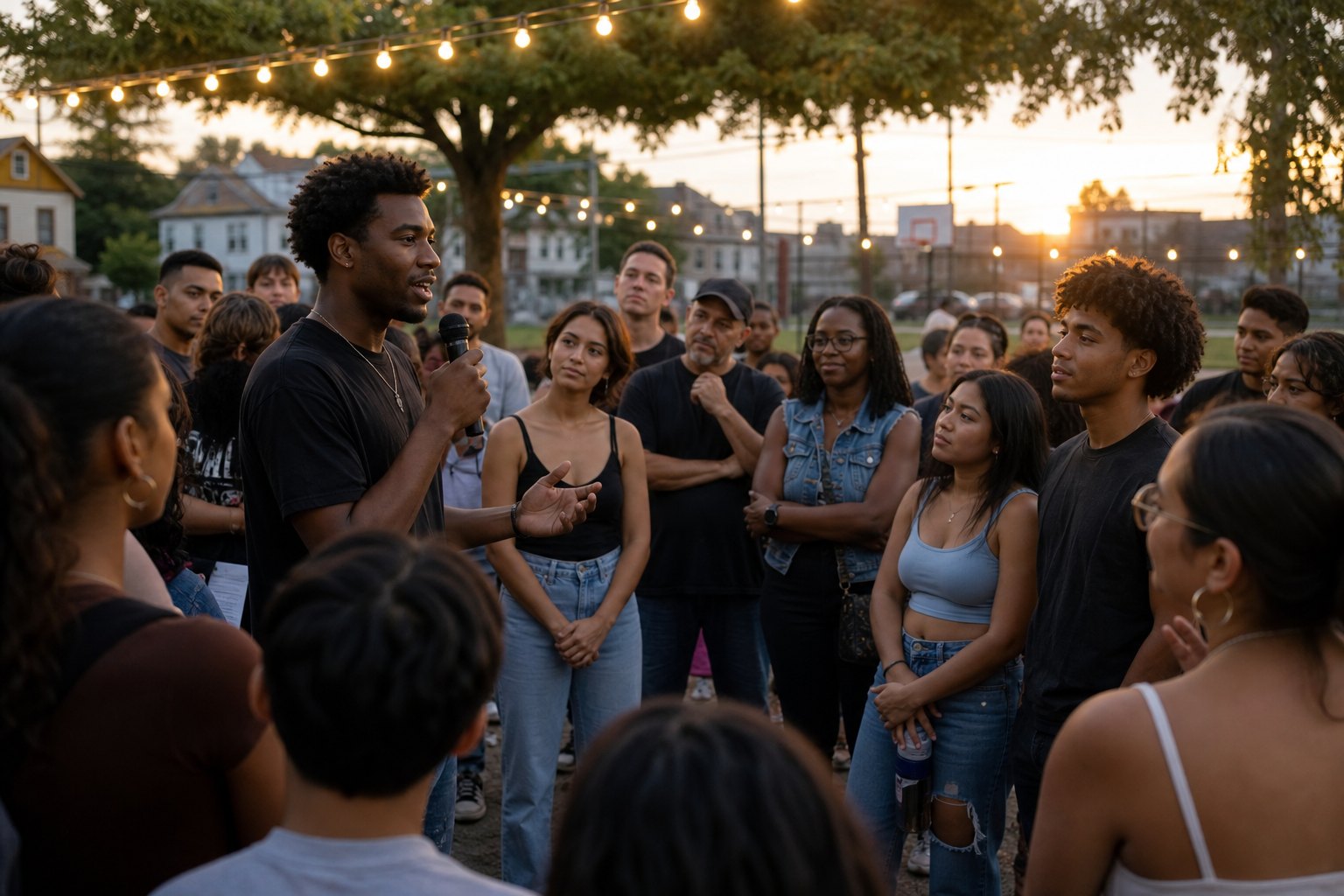
Community gathering in a neighborhood park at golden hour
Mentorship · Music · Community Outreach

Music is the way in. Community is the work.

We are rappers and community leaders who sit down with the people most programs write off, including active gang members, and turn everyday activity into mentorship, opportunity and real social services.

Credibility first
Led by people from the block
No conditions
You do not have to be “ready”
Door stays open
Come back any time
Nobody listens to a stranger. They listen to somebody who has been where they are.

That is the whole idea behind Rappers Without Borders. Outreach fails when it arrives as a lecture from someone with no standing in the neighborhood. It works when the person doing the asking has lived it, speaks the language, and is not there to judge anybody.

So we start where people already are. A cypher on the corner. A beat somebody made on their phone. A cookout, a studio session, a ride to an appointment. Those are not distractions from the work, they are the work. Every one of them is a chance to build enough trust that a real conversation becomes possible.

From there it turns practical. Mentorship. Conflict that gets talked down instead of shot out. Help getting an ID, a job application, a court date handled, a place to be on a Friday night. We take the ordinary things a community already does and we route them into services people can actually use.

What We Do

Six ways we show up,
every week.

None of this requires anybody to sign a pledge, pass a screening, or promise to change first. Show up as you are and we will work with that.

01

Street outreach

We go where people already gather instead of waiting for them to walk into an office. Familiar faces, consistent presence, no clipboard, no agenda beyond getting to know somebody.

02

One–on–one mentorship

Every person who wants one gets a mentor who returns calls. Not a caseworker with ninety files, a person who checks in, shows up to the hearing, and stays in touch when things go sideways.

03

Music & recording sessions

Writing, recording, and producing, with the technical side taught properly. Music gets people in the room and gives them something to be good at that nobody can take away.

04

Conflict interruption

When something is about to escalate, the people who can slow it down are the ones both sides respect. We mediate early, quietly, and without involving anybody who does not need to be involved.

05

Practical support

Rides, IDs, résumés, job applications, benefits paperwork, court dates, referrals to counseling and treatment. The unglamorous logistics that decide whether somebody gets to move forward.

06

Community events

Block events, open mics, cookouts, and showcases that give a neighborhood a reason to be in the same place peacefully, and give young people a stage in front of their own people.

Who We Work With

The people other programs
have given up on.

We do not run an eligibility screen. If you are in this community and you want something different, that is enough to start.

Young people at the edge

Teenagers and young adults who are already being pulled toward a set, a beef, or a charge. The earlier somebody has a real relationship with an adult who is not law enforcement, the more options they keep.

Active gang members

We do not require anybody to renounce anything to talk to us. Most people we work with are still in it when we meet them. Trust comes first, decisions come later, and they come from the person themselves.

People coming home

Reentry is where good intentions collapse over paperwork, transport and the first week without income. We help with the specifics and stay in contact past the point where most support ends.

Families and mothers

Parents who are watching it happen and do not know who to call. Often a family member reaches out before the young person does, and that is a completely valid way to start.

Artists with nowhere to record

Talent is not the scarce thing in this community. Access is. If somebody is serious about music, we will find them time, equipment and somebody who knows how to engineer a session.

Schools, courts and agencies

We take referrals from teachers, counselors, diversion programs, probation officers, clergy and hospitals, and we will tell you honestly whether we are the right fit for a particular young person.

In The Community

This is what the work
actually looks like.

Less ribbon cutting, more folding chairs. Most of it happens on steps, in community rooms, and in whatever space somebody lends us for the evening.

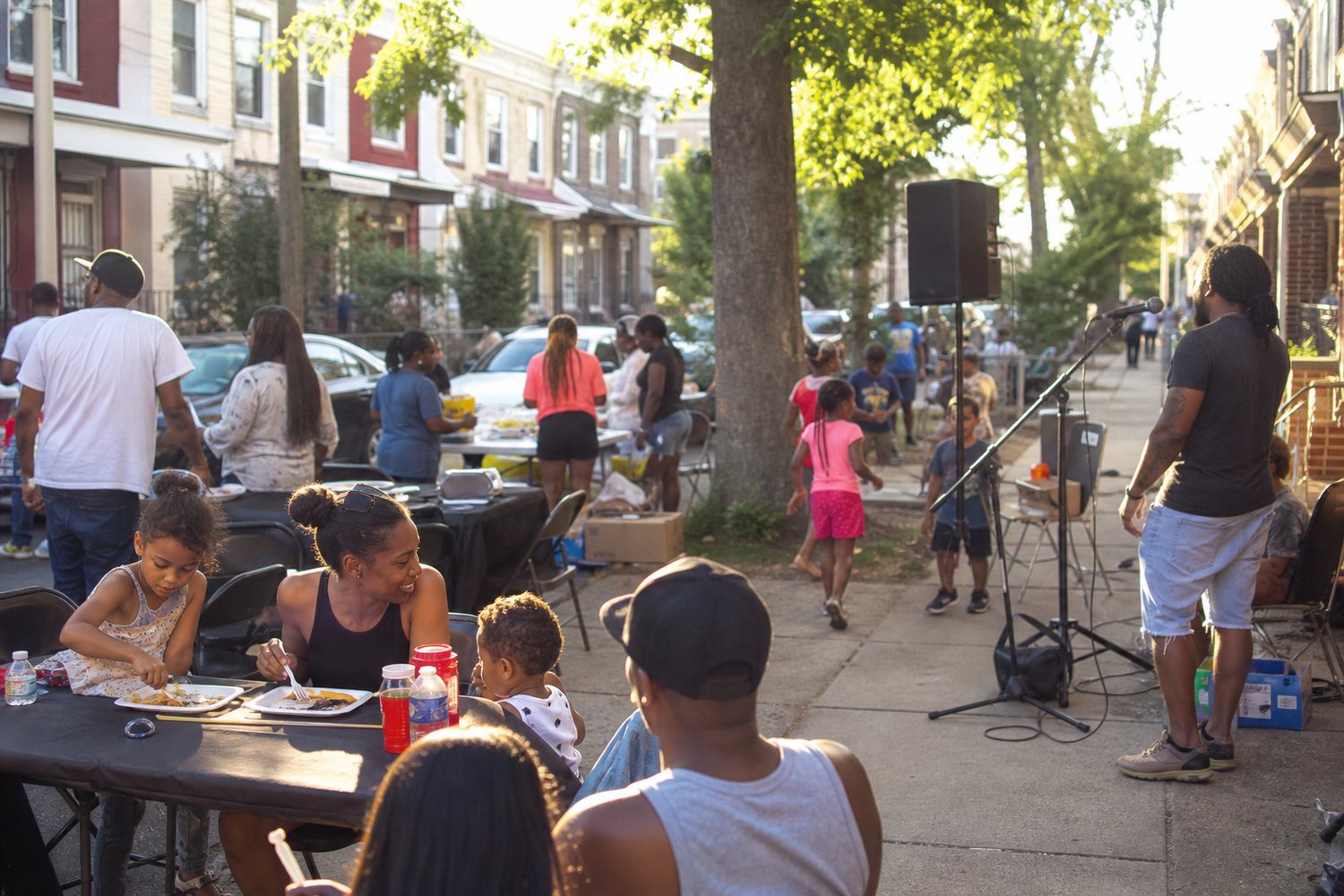
Neighborhood block event with families and a PA speaker
Block event
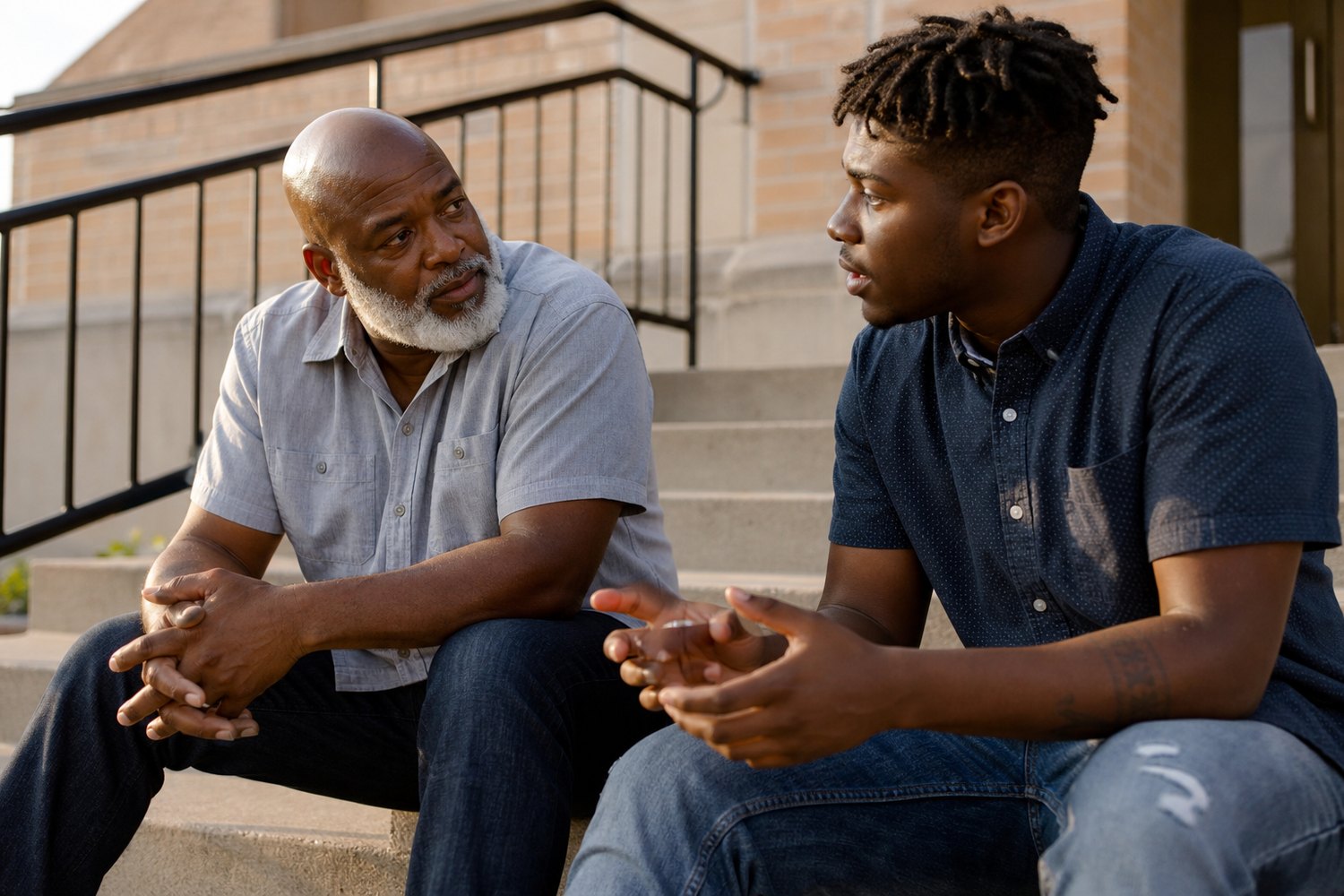
Mentor and young man talking on the steps
One–on–one
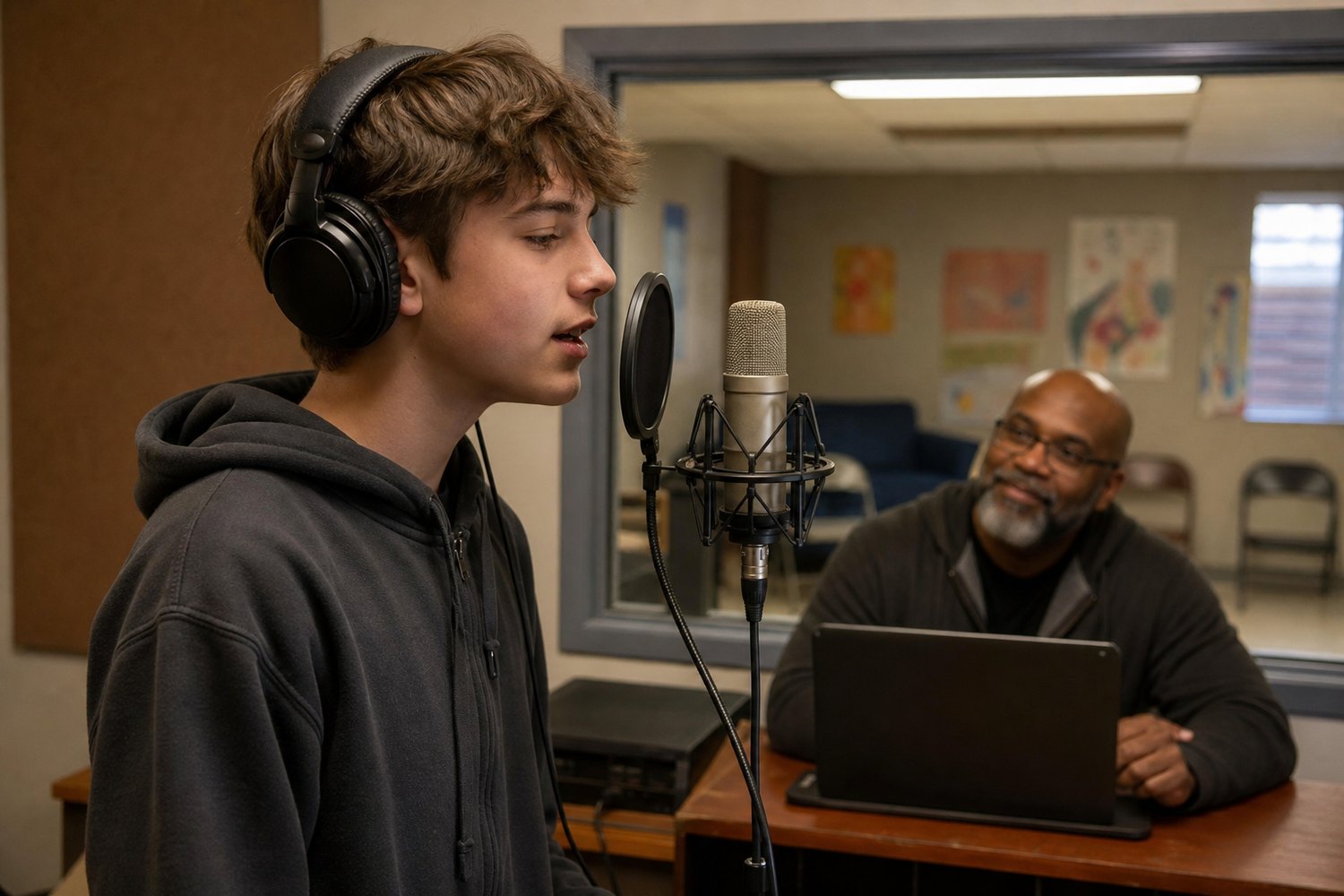
Young man recording vocals with a mentor engineering
Recording session
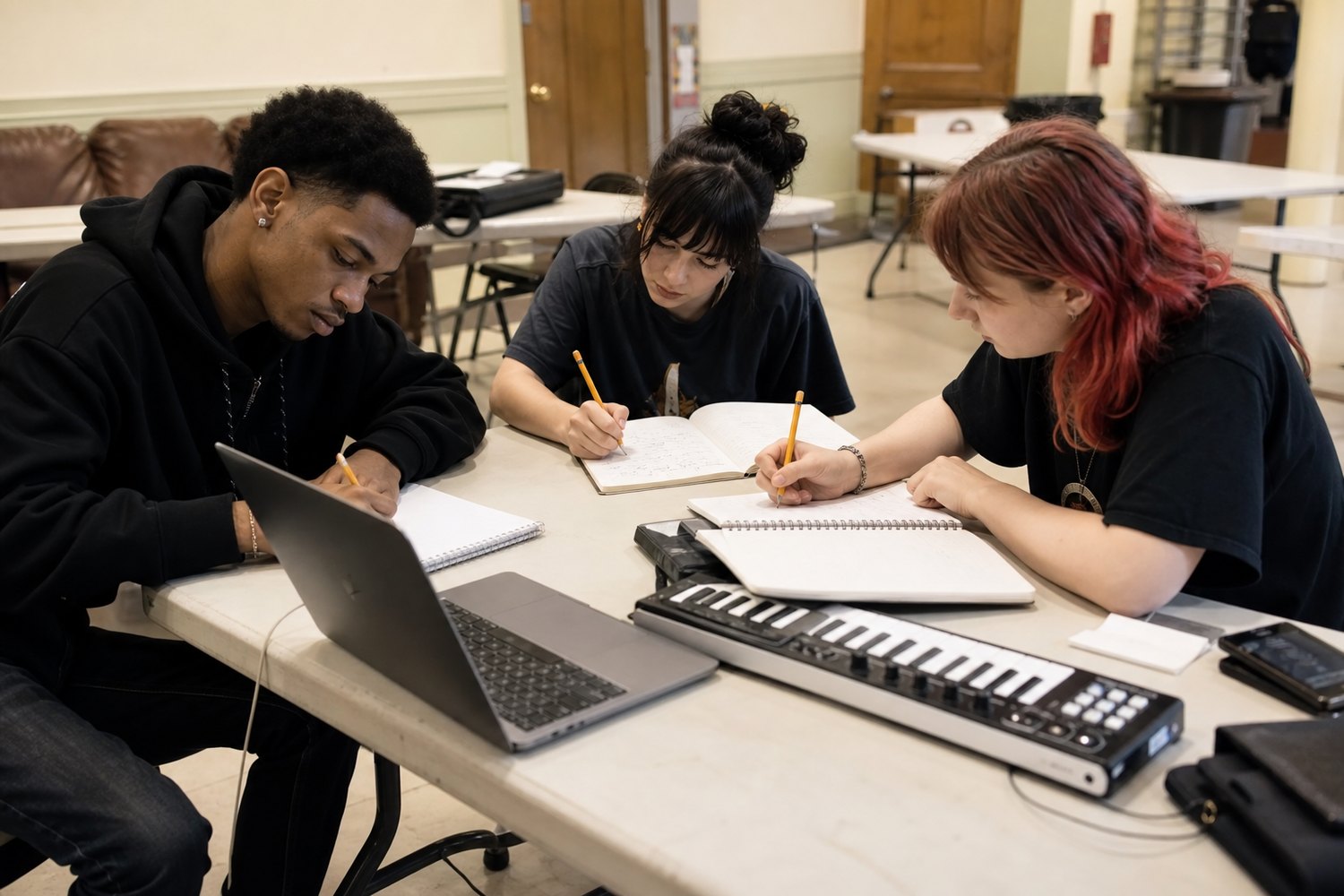
Songwriting workshop around a folding table
Writing workshop
Our Approach

Six things you can
hold us to.

We would rather be judged on how we operate than on a number in a report.

We are not police

We do not gather intelligence, we do not report names, and we do not hand anybody over. Outreach that cooperates with enforcement is not outreach, and it gets people hurt.

No conditions on the door

You do not have to be clean, out, employed, apologetic or ready. Requirements sound responsible and they filter out exactly the people who need the help most.

Led by people from here

The people doing this work are from these neighborhoods and many have lived the same story. That is not a marketing line, it is the reason anybody answers the door.

Relationships, not caseloads

We keep the numbers small enough that mentors can actually stay in touch. A relationship that survives a bad month is worth more than a hundred intake forms.

We stay after the crisis

Most contact ends when the emergency does. Ours does not. The month after a release, a hearing or a funeral is usually when the real work starts.

Honest about limits

We are not clinicians, lawyers or a housing authority. When something is outside what we can do, we say so and connect people to somebody who can, rather than improvising.

How It Works

From first contact to real footing.

Nobody moves through this on a schedule. Some people take a week to say anything real, some take a year, and both are fine.

Contact

You call, text, email, or somebody who knows us passes your name along. A family member or a school can start it just as easily as you can.

Sit down

An informal conversation, wherever you are comfortable. No intake packet, no questions you are not ready to answer.

Handle what is urgent

If there is a court date, a threat, a missing ID or no income this week, that gets dealt with before anything else.

Get plugged in

A mentor, a studio session, a weekly circle, a workshop, whatever fits. Momentum matters more than the perfect plan.

Stay connected

The relationship keeps going. Plenty of people come back a year later, and the door is open the same as it was the first day.

What Support Includes

The unglamorous list that changes outcomes.

Ask about any of these directly. If we cannot do it ourselves, we will usually know who can.

01

Identification and paperwork

Birth certificates, state IDs, social security cards, and the forms that quietly block everything else until they are sorted out.

02

Work readiness

Résumés, applications, interview practice, appropriate clothes, and introductions to employers who are willing to hire somebody with a record.

03

Court and probation support

Understanding what a hearing means, showing up to it, keeping track of dates and conditions, and speaking to a young person’s progress when it is appropriate to do so.

04

Transportation

Rides to interviews, hearings, appointments and programs. A missed bus should not be the reason somebody loses a job or a case.

05

Referrals to professionals

Counseling, substance use treatment, medical care, legal aid and housing services, through people we have working relationships with rather than a phone list.

06

Studio time and equipment

Access to recording space, engineering help, and instruction on writing, production and the business side, so that music can be a real skill instead of a hobby.

07

Family support

Coaching for parents and guardians, help navigating school meetings, and a person they can call when they do not know what to do next.

08

A place to be

Consistent, supervised evening hours. A large share of trouble is simply what happens when there is nowhere else to go.

Partnership

We are the group
that can reach them.

Institutions can offer services but often cannot get credible access. We can get access but cannot replace institutions. Partnership is how both problems get solved. We work with:

Schools and district staff dealing with students on the edge of expulsion
Diversion programs, probation and reentry services needing credible messengers
Churches and faith leaders already trusted in the neighborhood
Community centers and parks departments with space in the evenings
Violence prevention and public health initiatives
Hospitals and clinics seeing the results of neighborhood conflict
Local employers open to fair chance hiring
Studios, engineers and artists able to donate time or gear
Funders and city agencies looking for outreach that people actually answer
Get Involved

Six things that genuinely help.

Money is useful and it is not the only thing we need. Most of what makes a week work is time, space and access.

Mentor

Give a few hours a week

Consistency matters far more than credentials. If you can show up at the same time every week and keep your word, you can do this. We will train and support you.

Space

Lend us a room or a studio

A community room for a weekly circle, a gym for an evening, or studio hours nobody is using. Space is the single most common thing standing between a plan and a program.

Hire

Open a door at your business

An interview, a trial shift, an apprenticeship, or an honest conversation about what it would take. A first real paycheck changes the math on everything else.

Give

Fund the practical things

Gas and rides, ID fees, interview clothes, food at events, and recording equipment. Small, specific costs are what actually get people over the line.

Refer

Send someone our way

If you are a teacher, officer, counselor, pastor or parent and somebody comes to mind, reach out. There is no wrong way to make an introduction.

Amplify

Put us in front of people

Introductions to funders, coverage of an event, or simply telling the right person we exist. Most of our reach has come from somebody vouching for us.

Two people shaking hands across a table in a community room
Reach Out

Start the conversation.

Whether you need help, want to volunteer, or want to partner with us, this reaches DeVaugn directly. If it is urgent, call instead of writing.

What you write here stays with us. We are not law enforcement and we do not share names with them.
Questions

Asked often.

Do I have to leave my set to get help?

No. We are not going to make that a condition of talking to you, and we are not going to pressure you about it. Most of the people we work with are still involved when we meet them. What you decide about that is yours to decide, on your own timeline, and it does not change whether we pick up the phone.

Are you working with the police?

No. We do not collect information for law enforcement, we do not pass along names, addresses or details about anybody, and we are not a diversion arm of any agency. We do coordinate with schools, courts, clinics and reentry programs when it directly helps somebody we are working with, and we tell that person what we are doing and why before we do it.

Why rappers?

Because it is the language, and because credibility cannot be assigned by a job title. A cypher, a beat or a session gets you a real conversation in ten minutes where a flyer and an office appointment get you nothing in six months. Music is also a genuine skill with a genuine industry behind it, so the thing we use to make contact is worth learning in its own right.

Is there a cost?

No. Nothing we do costs the people we serve anything, and nothing depends on a family being able to pay.

How old do you have to be?

Most of our work is with teenagers and young adults, but we do not turn away someone older who is trying to get on their feet, and we work with parents and family members of any age.

My son is in trouble and he will not talk to anybody. Can you help?

Reach out anyway. A lot of what we do starts with a mother, grandmother or aunt calling before the young person is willing to. We can talk you through options, and we can make contact in a low pressure way that does not feel like an intervention being staged on him.

Can you speak at our school, church or event?

Yes. We do assemblies, panels, workshops and performances, and we can put together something appropriate for the age group and setting. Get in touch with roughly what you have in mind and a date.

How do referrals from an agency work?

Call or email and we will walk through it. We will be straight with you about whether we are a good fit for a particular young person, because a referral that goes nowhere costs that young person more than it costs either of us.

Do you need volunteers who are not musicians?

Very much so. Drivers, tutors, cooks, people who understand paperwork and benefits, tradespeople willing to teach, and adults who can simply be reliable every week. The music side is the front door, not the whole house.

Where does the money go?

Into the practical costs that make the work possible: transportation, ID and document fees, food at community events, interview clothing, recording equipment and studio time. We are happy to tell any donor exactly what a given contribution paid for.